


The Strait of Hormuz is one of the most important shipping routes in the world. This narrow waterway, located between Iran and Oman, carries a massive share of global trade.
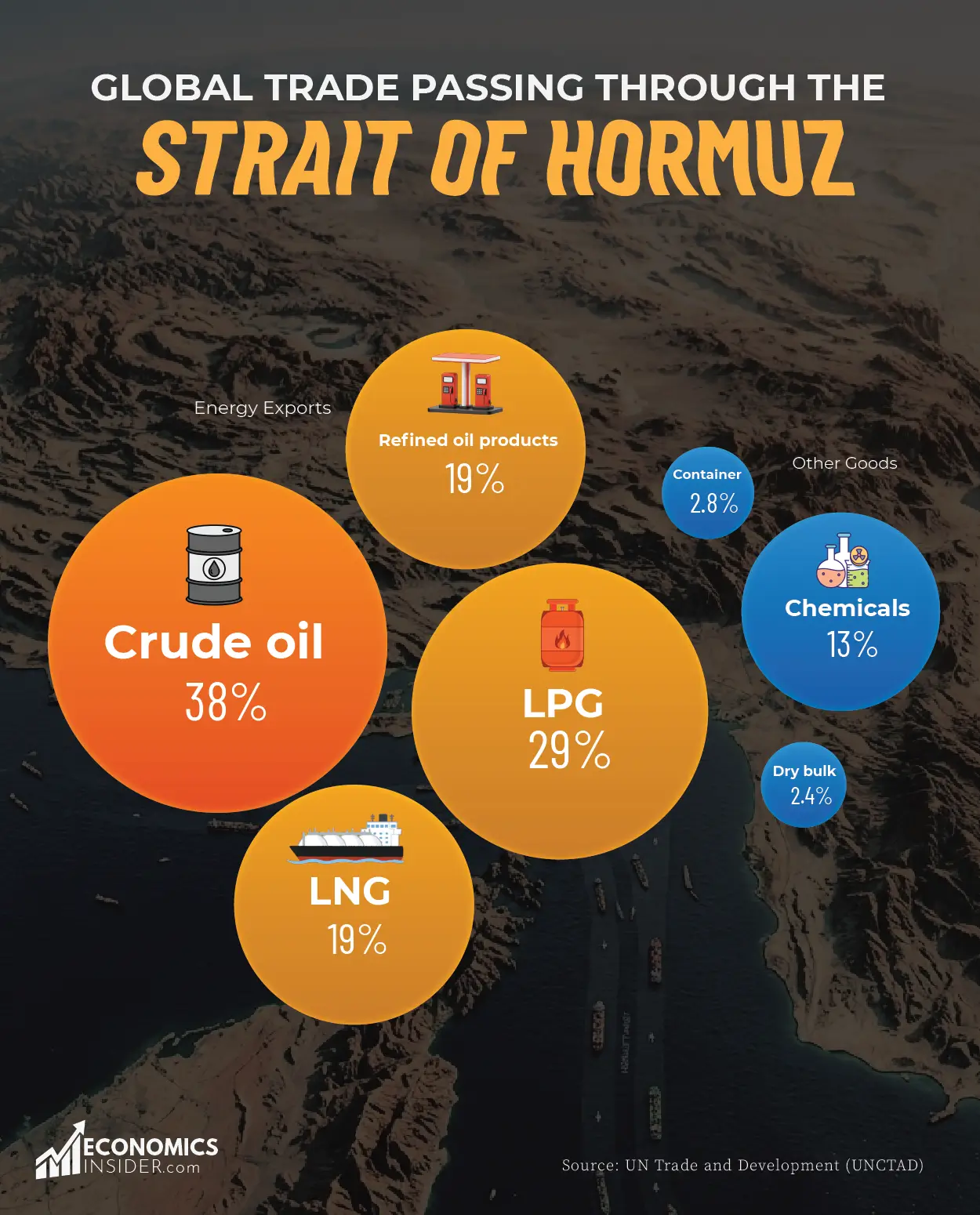
According to UN Trade and Development (UNCTAD), energy products dominate this route. Crude oil alone accounts for 38% of global seaborne trade passing through the strait, while liquefied petroleum gas (LPG) makes up 29%, and liquefied natural gas (LNG) contributes another 19%.
This means that a very large portion of the world’s oil and gas supply depends on the Strait of Hormuz. It acts as a global energy lifeline, which connects major producers in the Gulf to consumers across Asia and beyond.
Key Takeaways
- The Strait of Hormuz carries a huge share of global oil and gas trade, which makes it the world’s most important energy chokepoint.
- Energy dominates the route, but other sectors like chemicals, food, and container goods also rely on it.
Global Trade Flow Through the Strait of Hormuz
Share of global trade passing through the Strait of Hormuz, calculated by UNCTAD using average flows during the week before the military escalation that began on 28 February.
| Type | Share of global seaborne trade passing through the Strait of Hormuz |
|---|---|
| Crude oil | 38% |
| Liquefied petroleum gas | 29% |
| Liquefied natural gas | 19% |
| Refined oil products | 19% |
| Chemicals, including fertilizers | 13% |
| Container | 2.8% |
| Dry bulk, including grains | 2.4% |
Source: UN Trade and Development (UNCTAD)
Energy Trade: The Backbone of the Strait
UN Trade and Development data shows that the Strait of Hormuz is primarily an energy corridor. Crude oil holds the largest share of global seaborne trade passing through the strait. When LPG and LNG are added, energy products dominate the majority of trade passing through the strait.
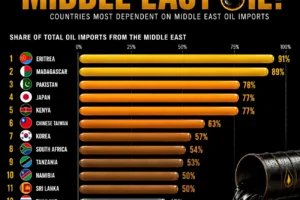
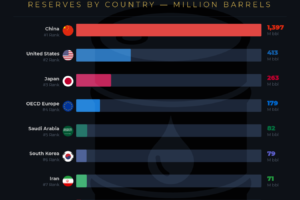
Countries like China, India, Japan, and South Korea depend heavily on these imports to power their economies. Any disruption in the Strait of Hormuz can quickly affect fuel prices and energy security worldwide.
8 Major Oil Shipping Routes and Chokepoints in The World
What Else Moves Through the Strait
Beyond energy, the Strait of Hormuz is also important for many other types of goods. According to the data, chemicals and fertilizers account for 13% of the trade, which are essential for agriculture and industrial production.
In addition, container goods account for 2.8% of Global Trade Passing through the Strait of Hormuz, which includes everyday consumer products, electronics, and manufactured items.
This shows that the Strait of Hormuz is not just about fuel. It also supports food security, industrial output, and everyday consumption, which makes it even more critical to the global economy.
Why This Route Matters So Much
The Strait of Hormuz connects the oil-rich Gulf region to global markets. Major exporters like Saudi Arabia, Iraq, the UAE, and Qatar rely heavily on this route to ship their oil and gas.
Because such a large share of global energy and goods flows through one narrow passage, it creates a major dependency. This is why the strait is often described as a strategic chokepoint in global trade.
Why It Is Hard to Replace
There are very few alternatives to the Strait of Hormuz. While some pipelines exist, they cannot carry the same volume of oil and gas.
Most Gulf exports still depend on this route, which makes the global economy vulnerable. This lack of alternatives is what makes the Strait so strategically important for global energy trade.
Conclusion
The Strait of Hormuz is one of the most critical trade routes in the world. UNCTAD data shows that energy products dominate this route, with crude oil, LPG, and LNG forming the largest share. At the same time, the strait also supports the movement of chemicals, food, and consumer goods. The Strait of Hormuz is a small passage with a massive impact on the global economy. Any disruption here is not just a regional issue; it is a global economic risk.