




Cost of living index differs a lot around the world, and where you live can make a huge impact on how far your money goes. The Cayman Islands, Switzerland, and Iceland are among the most expensive places in the world. On the other hand, countries like Pakistan, India, and Libya have very low cost-of-living indices, meaning that day-to-day life costs much less there.
The cost of living differences are influenced not just by prices of goods and services, but also by factors like average salaries, availability of goods, and local economic conditions. For example, while a country may have low prices, incomes might also be lower, which affects the overall affordability of goods and services. Additionally, some high-cost countries offer better infrastructure, healthcare, and public services, which can make the higher expenses more manageable.
Key Takeaways
- The most expensive countries are often small, wealthy, or very developed economies.
- The cheapest countries on the list are typically those where the cost of basic necessities is low. However, this affordability does not always translate into an easy life, as it often comes with trade-offs such as lower incomes and weaker infrastructure.
- Cost of living is only one part of the overall “living picture.” Factors such as income levels, economic stability, and quality of life are equally important in determining how people actually live in each country.
Understanding the Cost of Living Index
Numbeo’s cost of living index compares living expenses across 143 countries worldwide using New York City as the benchmark, set at an index value of 100. The Index’s values typically range from below 30 in very low-cost countries to above 110 in some of the most expensive ones. This index is a way to compare how much it generally costs to live in different places — not in terms of some single item, but by looking at a “basket” of typical goods and services like food, rent, utilities, and transportation.
The index does not tell exactly what one person will spend, but it gives a useful comparison: which countries are relatively more expensive, and which are cheaper.
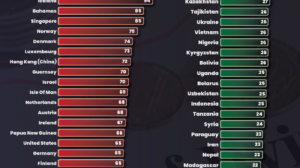
| Rank | Country | Cost of Living Index |
|---|---|---|
| 1 | 🇰🇾 Cayman Islands | 108 |
| 2 | 🇨🇭 Switzerland | 107 |
| 3 | 🇮🇸 Iceland | 94 |
| 4 | 🇧🇸 Bahamas | 85 |
| 5 | 🇸🇬 Singapore | 85 |
| 6 | 🇳🇴 Norway | 79 |
| 7 | 🇩🇰 Denmark | 74 |
| 8 | 🇱🇺 Luxembourg | 73 |
| 9 | 🇭🇰 Hong Kong (China) | 72 |
| 10 | 🇬🇬 Guernsey | 70 |
| 11 | 🇮🇱 Israel | 70 |
| 12 | 🇮🇲 Isle Of Man | 69 |
| 13 | 🇳🇱 Netherlands | 68 |
| 14 | 🇦🇹 Austria | 68 |
| 15 | 🇮🇪 Ireland | 67 |
| 16 | 🇵🇬 Papua New Guinea | 66 |
| 17 | 🇺🇸 United States | 65 |
| 18 | 🇩🇪 Germany | 65 |
| 19 | 🇫🇮 Finland | 65 |
| 20 | 🇫🇷 France | 64 |
| 21 | 🇬🇧 United Kingdom | 64 |
| 22 | 🇧🇪 Belgium | 64 |
| 23 | 🇦🇺 Australia | 63 |
| 24 | 🇸🇪 Sweden | 63 |
| 25 | 🇰🇷 South Korea | 62 |
| 26 | 🇨🇦 Canada | 61 |
| 27 | 🇵🇷 Puerto Rico | 60 |
| 28 | 🇳🇿 New Zealand | 59 |
| 29 | 🇮🇹 Italy | 57 |
| 30 | 🇲🇴 Macao (China) | 56 |
| 31 | 🇪🇪 Estonia | 56 |
| 32 | 🇨🇾 Cyprus | 55 |
| 33 | 🇦🇪 United Arab Emirates | 53 |
| 34 | 🇲🇹 Malta | 53 |
| 35 | 🇺🇾 Uruguay | 51 |
| 36 | 🇬🇷 Greece | 51 |
| 37 | 🇸🇮 Slovenia | 51 |
| 38 | 🇨🇷 Costa Rica | 50 |
| 39 | 🇯🇲 Jamaica | 50 |
| 40 | 🇾🇪 Yemen | 50 |
| 41 | 🇹🇼 Taiwan | 49 |
| 42 | 🇹🇹 Trinidad And Tobago | 49 |
| 43 | 🇱🇻 Latvia | 49 |
| 44 | 🇯🇵 Japan | 49 |
| 45 | 🇭🇷 Croatia | 49 |
| 46 | 🇪🇸 Spain | 49 |
| 47 | 🇱🇹 Lithuania | 48 |
| 48 | 🇨🇿 Czech Republic | 48 |
| 49 | 🇬🇾 Guyana | 47 |
| 50 | 🇶🇦 Qatar | 47 |
| 51 | 🇸🇰 Slovakia | 47 |
| 52 | 🇨🇩 Democratic Republic of the Congo | 47 |
| 53 | 🇧🇭 Bahrain | 46 |
| 54 | 🇧🇳 Brunei | 46 |
| 55 | 🇲🇻 Maldives | 46 |
| 56 | 🇵🇹 Portugal | 46 |
| 57 | 🇸🇳 Senegal | 45 |
| 58 | 🇦🇱 Albania | 44 |
| 59 | 🇵🇱 Poland | 44 |
| 60 | 🇵🇦 Panama | 43 |
| 61 | 🇵🇸 Palestine | 43 |
| 62 | 🇨🇮 Ivory Coast | 43 |
| 63 | 🇭🇺 Hungary | 42 |
| 64 | 🇧🇿 Belize | 42 |
| 65 | 🇧🇼 Botswana | 42 |
| 66 | 🇪🇹 Ethiopia | 42 |
| 67 | 🇸🇦 Saudi Arabia | 42 |
| 68 | 🇷🇸 Serbia | 41 |
| 69 | 🇦🇲 Armenia | 41 |
| 70 | 🇱🇧 Lebanon | 41 |
| 71 | 🇰🇼 Kuwait | 40 |
| 72 | 🇨🇺 Cuba | 40 |
| 73 | 🇲🇪 Montenegro | 40 |
| 74 | 🇨🇲 Cameroon | 40 |
| 75 | 🇧🇬 Bulgaria | 39 |
| 76 | 🇴🇲 Oman | 39 |
| 77 | 🇦🇷 Argentina | 38 |
| 78 | 🇷🇴 Romania | 38 |
| 79 | 🇹🇷 Turkey | 38 |
| 80 | 🇬🇹 Guatemala | 38 |
| 81 | 🇲🇽 Mexico | 38 |
| 82 | 🇸🇻 El Salvador | 38 |
| 83 | 🇲🇺 Mauritius | 37 |
| 84 | 🇯🇴 Jordan | 37 |
| 85 | 🇷🇺 Russia | 36 |
| 86 | 🇨🇱 Chile | 36 |
| 87 | 🇧🇦 Bosnia And Herzegovina | 36 |
| 88 | 🇲🇿 Mozambique | 36 |
| 89 | 🇻🇪 Venezuela | 36 |
| 90 | 🇹🇭 Thailand | 35 |
| 91 | 🇩🇴 Dominican Republic | 35 |
| 92 | 🇭🇳 Honduras | 34 |
| 93 | 🇲🇰 North Macedonia | 34 |
| 94 | 🇲🇩 Moldova | 33 |
| 95 | 🇿🇲 Zambia | 33 |
| 96 | 🇿🇼 Zimbabwe | 33 |
| 97 | 🇫🇯 Fiji | 33 |
| 98 | 🇰🇭 Cambodia | 33 |
| 99 | 🇱🇰 Sri Lanka | 33 |
| 100 | 🇳🇮 Nicaragua | 32 |
| 101 | 🇿🇦 South Africa | 32 |
| 102 | 🇳🇦 Namibia | 31 |
| 103 | 🇬🇪 Georgia | 31 |
| 104 | 🇲🇾 Malaysia | 31 |
| 105 | 🇬🇭 Ghana | 31 |
| 106 | 🇲🇳 Mongolia | 30 |
| 107 | 🇲🇦 Morocco | 30 |
| 108 | 🇵🇪 Peru | 30 |
| 109 | 🇷🇼 Rwanda | 30 |
| 110 | 🇵🇭 Philippines | 29 |
| 111 | 🇨🇳 China | 29 |
| 112 | 🇦🇿 Azerbaijan | 29 |
| 113 | 🇪🇨 Ecuador | 29 |
| 114 | 🇧🇷 Brazil | 29 |
| 115 | 🇰🇪 Kenya | 28 |
| 116 | 🇨🇴 Colombia | 28 |
| 117 | 🇽🇰 Kosovo (Disputed Territory) | 28 |
| 118 | 🇹🇳 Tunisia | 27 |
| 119 | 🇮🇶 Iraq | 27 |
| 120 | 🇩🇿 Algeria | 27 |
| 121 | 🇰🇿 Kazakhstan | 27 |
| 122 | 🇹🇯 Tajikistan | 26 |
| 123 | 🇺🇦 Ukraine | 26 |
| 124 | 🇻🇳 Vietnam | 26 |
| 125 | 🇳🇬 Nigeria | 26 |
| 126 | 🇰🇬 Kyrgyzstan | 26 |
| 127 | 🇧🇴 Bolivia | 26 |
| 128 | 🇺🇬 Uganda | 25 |
| 129 | 🇧🇾 Belarus | 25 |
| 130 | 🇺🇿 Uzbekistan | 25 |
| 131 | 🇮🇩 Indonesia | 25 |
| 132 | 🇹🇿 Tanzania | 24 |
| 133 | 🇸🇾 Syria | 24 |
| 134 | 🇵🇾 Paraguay | 23 |
| 135 | 🇮🇷 Iran | 23 |
| 136 | 🇳🇵 Nepal | 23 |
| 137 | 🇲🇬 Madagascar | 22 |
| 138 | 🇧🇩 Bangladesh | 21 |
| 139 | 🇪🇬 Egypt | 20 |
| 140 | 🇦🇫 Afghanistan | 19 |
| 141 | 🇮🇳 India | 19 |
| 142 | 🇵🇰 Pakistan | 18 |
| 143 | 🇱🇾 Libya | 17 |
Source: Numbeo
The World’s Most Expensive Countries to Live In
At the top of your list, the Cayman Islands sit with the highest cost-of-living index of 108. These islands are known for being a luxury financial hub, with strong demand for real estate, tourism, and imported goods. The cost for daily living — not just rent, but food, transportation, and services — is very high in such a small economy.
Switzerland is nearly as expensive, with an index of 107. In Switzerland, many things cost a lot — groceries, housing, and daily services. But Swiss people often have very good incomes, which helps them afford these high costs. According to Numbeo’s data, Switzerland’s local purchasing power index is very high, which shows that while things are expensive, people’s wages are also relatively strong.
Iceland also ranks high, with a cost-of-living index of 94. This island country faces high costs for many goods because of its remote location, high import costs, and relatively small domestic market. On top of that, utilities in Iceland (like heating) can be pricey.
Other countries in the expensive group include the Bahamas, Singapore, Norway, Denmark, Luxembourg, Hong Kong, and Guernsey. These places combine high living standards, strong economies, and, in many cases, limited land or high costs for imported goods. For example, Singapore is expensive because it’s a wealthy city-state, land is limited, and many everyday goods are imported.
The World’s Least Expensive Countries to Live In
At the lower end of the list are Pakistan (index 18), India (19), and Libya (17). These countries are very low on the cost-of-living scale compared to the top ones.
Living in countries like Pakistan and India means that many basic costs — local food, housing, and services — are quite low when compared to wealthier countries. But that doesn’t always make life easy: wages may be lower, infrastructure might be less developed, and the stability of economic and social systems may vary.
According to a global cost-of-living comparison, the world’s most affordable nations include Pakistan, Libya, and India. There are also reports from development metrics showing that as of 2024, Pakistan is among the cheapest countries to live in, based on the per-month cost for basic expenses.
Top 25 Most Expensive Cities in the World to Live In 2025
Other Important Countries and Their Cost of Living
While it’s helpful to look at the top and bottom, many other countries fall somewhere in the middle of the cost-of-living index.
For example, the United States, Germany, and Finland are around the index value of 65. These countries are not cheap, but they are not the most expensive either. For many people, living there means balancing a fairly high cost of living with a decent income and good infrastructure.
European countries such as the United Kingdom, France, and Belgium also rank moderately high (around index 64). These are developed economies with strong service sectors, good public systems, and relatively high costs for housing, food, and utilities.
Australia and Sweden are also in the mid-to-high cost zone (around index 63). Housing in Australia, especially in big cities, is one reason for the higher cost, and in Sweden, the cost of services, taxes, and goods also contributes.
The United Arab Emirates (UAE) scores about 53. This is interesting because in cities like Dubai and Abu Dhabi, housing is expensive, but everyday local costs can be more moderate.
On the more affordable side, emerging economies like China, the Philippines, and Brazil (which are roughly around index 29) represent places where many daily expenses are surprisingly low, at least compared to very rich nations. While income potential may not always match that of wealthy Western countries, the cost of day-to-day life can be significantly lower, making these places attractive for certain kinds of workers, especially remote or nomadic professionals.
Why Some Places Are So Expensive While Others Are Cheap
There are several important reasons why the cost of living is so different across countries.
One big factor is import dependence. Small island nations — such as the Cayman Islands or the Bahamas — often import a large share of their goods. Because they must bring in things like food, construction materials, and fuel, the prices for those goods go up, and that pushes overall living costs higher.
Another factor is wages and currency strength. In wealthy countries, people tend to earn more, but local prices are also high. For example, Switzerland has a very strong currency (the Swiss franc) and high wages, which makes living expensive, but people also have more purchasing power. Numbeo’s data shows very high local purchasing power for Switzerland, which means residents can afford a lot despite the high cost.
Land and housing costs are also very important. In densely populated countries (or small ones), real estate is expensive. Space is limited, so renting or owning property tends to be costly. In wealthier economies, demand for housing is often very high, which pushes up rental and buy prices.
Taxes and regulations also play a role in a country’s cost of living. Countries with high taxes or strict rules may pass on costs to service providers, who then charge more for their services. On the flip side, some rich countries have lower or more favorable tax systems, but that may come with higher costs for other parts of daily life.
Conclusion
Numbeo’s cost of living index helps compare the cost of living in different countries and cities using the same standard. It looks at everyday costs, rent, food, eating out, and how much people can actually afford based on their income. While the numbers are not perfect, they give a useful general idea of where life is cheaper or more expensive, making it easier to understand real living costs around the world.