








The October employment situation shows a more positive picture of the American job market compared with the slower growth seen in recent months. However, not all parts of the labor market are improving at the same pace. Millions of Americans remain unemployed, and the number of people working part-time because they cannot find full-time jobs increased during the month.
The latest report also shows that some industries are creating jobs much faster than others. Professional and business services, health care, transportation, and manufacturing recorded gains in October.
Key Takeaways
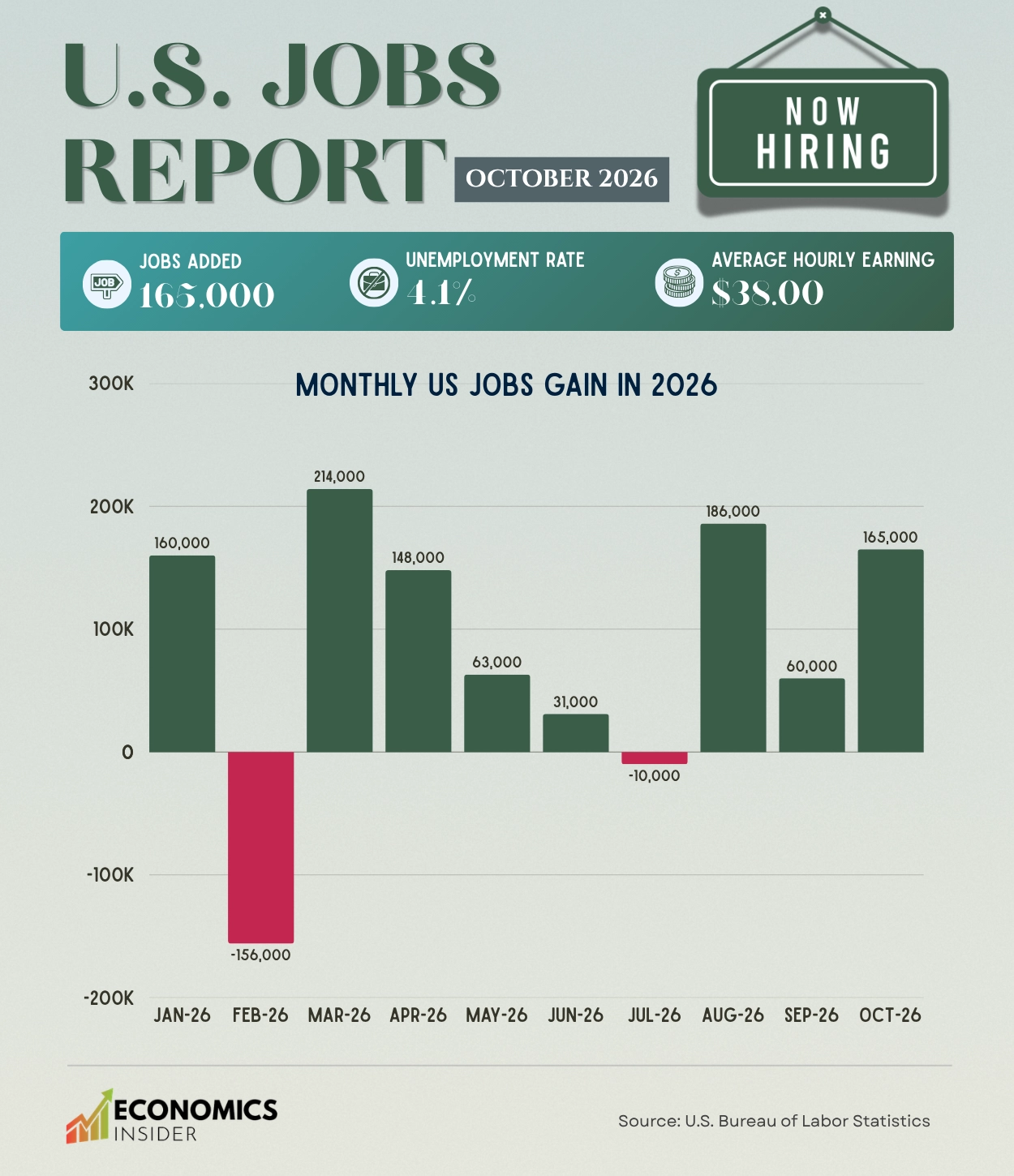
- U.S. added 165,000 jobs in October, well above the average monthly gain of 48,000 over the previous 12 months.
- The unemployment rate fell to 4.1% from 4.2%, and it has stayed between 4.1% and 4.3% since March.
- Pay is rising slower than prices, and more people are stuck in part-time work they did not choose.
U.S. Jobs Report October 2026
All figures come from the U.S. Bureau of Labor Statistics (BLS) Employment Situation report for October 2026, released on Friday, November 6, 2026. The payroll numbers are preliminary and can be revised in the next two months.
| Measure | Aug-26 | Sep-26 | Oct-26 |
|---|---|---|---|
| Jobs added (monthly, revised) | 186,000 | 60,000 | 165,000 |
| Unemployment rate | 4.10% | 4.20% | 4.10% |
| People unemployed | 7.03 million | 7.11 million | 7.07 million |
| Labor force participation rate | 61.60% | 61.80% | 61.90% |
| Employment-population ratio | 59.10% | 59.20% | 59.30% |
| Average hourly earnings | $37.76 | $37.86 | $38.00 |
U.S. Adds 165,000 Jobs in October
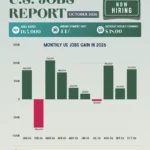
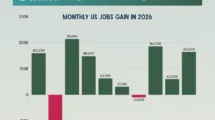
The U.S. economy added 165,000 nonfarm payroll jobs in October 2026. This was considerably higher than the average monthly increase of 48,000 jobs over the previous 12 months.
| Month | Jobs added/lost |
|---|---|
| Jan-26 | 160,000 |
| Feb-26 | -156,000 |
| Mar-26 | 214,000 |
| Apr-26 | 148,000 |
| May-26 | 63,000 |
| Jun-26 | 31,000 |
| Jul-26 | -10,000 |
| Aug-26 | 186,000 |
| Sep-26 | 60,000 |
| Oct-26 | 165,000 |
| Total (Jan–Oct) | 861,000 |
The result also exceeded economists’ expectations, which had generally pointed to a much smaller increase.
September’s job growth was revised upward from 29,000 to 60,000. August also received a major upward revision, increasing from 133,000 to 186,000 jobs. Together, the revisions added 84,000 jobs to the previously reported figures for August and September.
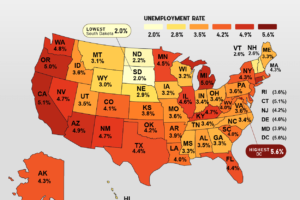
Unemployment Rate Falls to 4.1%
The unemployment rate dropped from 4.2% to 4.1%. The rate has stayed in a narrow band between 4.1% and 4.3% since March. The job market is not getting much worse, but it is not tightening fast either.
About 7.1 million people are out of work. The share of adults in the labor force edged up to 61.9%, which means a few more people are working or looking for work. That is a good sign, since people usually return to the job hunt when they think they can find something.
The gaps between groups are still large. Teenagers face an unemployment rate of 13.9%. Black workers have a rate of 6.6%, compared with 3.7% for White workers and 2.8% for Asian workers.
Education makes a big difference too. Workers with a bachelor’s degree or higher sit at 2.6%, while workers without a high school diploma are at 5.8%.
Which Industries Added the Most Jobs?
Professional and business services added 70,000 jobs. That is far above its usual monthly gain of about 15,000. Most of it came from technical and scientific services, and from office support and administrative work.
Health care added 42,000 jobs, led by hospitals, home health care and outpatient centers. Health care keeps hiring in almost every month, whatever the rest of the economy is doing.
Manufacturing also continued its slow comeback with 19,000 new jobs. It is up 101,000 since December 2025. Factories making computer and electronic products, machinery and metals led the way.
On the weaker side, leisure and hospitality, which covers hotels, restaurants and entertainment, lost 13,000 jobs. Wholesale trade lost 9,000. Information and construction were flat or slightly down.
Paychecks Are Not Keeping Up
Average hourly pay rose 14 cents in October, to $38.00. Over the past year, that is a gain of 3.1%. The problem is prices. That 3.1% annual wage growth trails the latest 3.7% inflation rate. In plain terms, the average worker can buy a little less today than a year ago, even with a raise. Workers also did not get more hours. The average workweek stayed at 34.4 hours.
This is one reason the job market can look healthy on paper while many households still feel squeezed.
The Bottom Line
October was a good month for American jobs. Hiring jumped, the past two months were revised higher, and the unemployment rate dipped to 4.1%. Health care, business services, transportation and factories all pitched in.
But one strong month does not make a trend. Pay is lagging behind prices, more people are stuck in part-time work, and many long-term job seekers are still waiting. So, the job market is steady and a bit stronger than feared, but it is not booming for everyone.